
My oldest daughter forgot her lunch today.
And I have feelings about it.
I know, I know. When you pack a lunch every single day, of course it’s going to get forgotten once in a while. I get it. I really do.
But she forgets it a lot.
And it’s not like I’m crafting Pinterest-worthy bento boxes here. It’s a 20-minute, throw-it-together, barely-counts-as-effort kind of lunch. Still, because my daughter leaves the house so early, I’m in the kitchen at 5 AM making it.
So yes, this mama is a little grumpy.
Which brings me to today’s topic: our family’s lunchbox routine.
“I Love Tamagoyaki. Put It in Every Day!”
My oldest is obsessed with tamagoyaki, the Japanese rolled omelet. So when she said, “I love it, can you put it in my lunch every day?”, that became the rule for both of my older girls’ lunchboxes.
Here’s the funny part: we almost never cook eggs at home.
That’s because Tommy has an egg allergy, and a serious one. Even sharing chopsticks or a frying pan can set off a reaction. So I’m less worried about him feeling left out and more worried about cross-contact. And honestly, I don’t want mealtimes at our house to feel tense.
The solution? The big sisters get their eggs in their lunchboxes.
Also, if I didn’t put eggs in, I’d have a hard time filling those boxes. (Ha!)
“Won’t You Get Bored?”
Still, tamagoyaki every day? Even a favorite gets old, right?
So I decided to mix it up:
- Dashi-rolled omelet (savory, made with Japanese soup stock)
- Sweet tamagoyaki
- With imitation crab
- With green onion
- With seaweed
- With tiny dried baby sardines (shirasu)
And the reaction from my daughter? Nothing. Zero. Not a word.
Finally I couldn’t take it anymore and asked her point-blank: “Which one is your favorite?”
“???”
It turns out she hadn’t even noticed there were different kinds.
“I don’t really remember.”
“Were there that many kinds?”
“Tamagoyaki is tamagoyaki. Anything’s fine.”
…
Really?
So it was all for my own satisfaction. I was so deflated that from the next day on, it’s been the same plain dashi-rolled omelet. Every. Single. Day.
Honestly? So much easier.
And Then Came the Plot Twist
One day, my daughter dropped this gem:
“Do you really have to put tamagoyaki in every day?”
…
You’re the one who asked for it!!
Kids, right?
The Sister Who Never Forgets Her Lunch
My second daughter, on the other hand, has never once forgotten her lunch. And she forgets everything else, believe me.
Her explanation: “If I didn’t have my lunch, I wouldn’t know what I was even there for.”
Well. Okay then. (Ha!)
Making Allergy-Friendly and Regular Lunches at the Same Time
The other tricky part of our lunch routine is making an allergy-safe lunch and regular lunches at the same time.
But if I made everything separately, my mornings would be a nightmare. So I keep the process shared for as long as possible.
Here’s how my morning usually goes.
Step 1: Pack the rice first.
Rice takes forever to cool down, so it goes in the boxes first.
Step 2: Make the shared dishes.
Let’s say the school lunch menu that day is yakisoba (Japanese stir-fried noodles). I make Tommy a rice-flour noodle version. Sure, I could just pack him a rice ball, but he’s an elementary school boy, and yakisoba is a huge hit with that crowd. When everyone else is eating yakisoba, being the only kid with a rice ball would make anyone jealous.
The big sisters, though, refuse to have noodles in their lunchboxes. They’re strictly rice-and-sides girls.
So on those days, I make rice-noodle yakisoba and pork chappu at the same time. (Pork chappu is a Japanese home-style dish of pork and veggies stir-fried in ketchup-based sauce.)
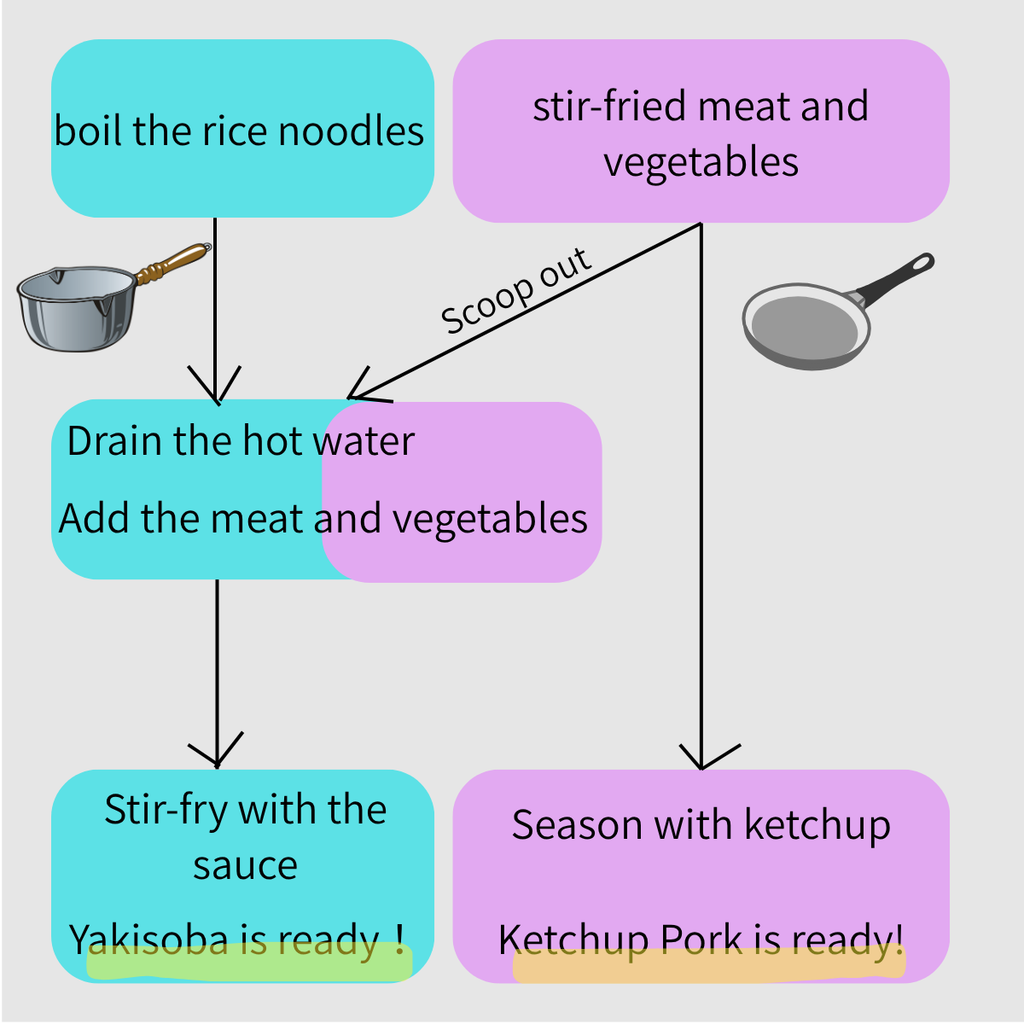
- Boil water in a pot and cook the rice noodles.
- In a frying pan, stir-fry a big batch of meat and veggies. No seasoning yet.
- Drain the noodles. I skip the colander and just hold the noodles back with my cooking chopsticks while I pour out the water. They come out a bit soggy, but I don’t care. Fewer dishes to wash beats perfect noodles. (Ha!) Plus, by the time I’ve spread them out to cool before packing, the extra moisture evaporates and they end up just right.
- Scoop Tommy’s portion of the meat and veggies from the frying pan into the noodle pot.
- Add the sauce to the pot and toss everything together. Tommy’s yakisoba is done.
Start to finish, it’s all done in one pot.
Then I season what’s left in the frying pan with ketchup, and that’s our ketchup pork.This way, I never have to make the regular dishes and the allergy-friendly noodles in two totally separate processes.
Microwave Multitasking
Once the shared dishes are done, I line up everything that needs reheating, like frozen foods and last night’s leftovers. While each item takes its turn in the microwave, I make the tamagoyaki.
Multitasking is the first step to a faster morning. That’s pretty much how our lunch routine goes. (I also chop the meat and veggies the night before, so in the morning all I have to do is cook.)
Our Lunchbox Formula: 4 Sides + a Veggie
My basic formula is:
4 main sides + a veggie (cherry tomatoes, broccoli, etc.)
Of the four sides:
- One is, of course, tamagoyaki. (Ha!)
- One is a frozen food, usually something fried.
- That leaves just two to figure out.
Sometimes I repurpose what I made for the shared dishes. Sometimes it’s last night’s leftovers. Sometimes it’s something I batch-cooked and froze ahead of time. Making all four sides from scratch every morning is just not realistic.
We Fry, But Never with Wheat
We do make some fried foods at home, like plain deep-fried veggies or tatsuta-age (starch-coated fried chicken). But anything with a wheat-flour coating, like breaded cutlets or croquettes, is off the table, because Tommy is allergic to wheat too. Once the oil has been used for those, we can’t reuse it safely.
Still, I want my daughters to enjoy all kinds of food. So that’s where lunchboxes come in. What we can’t do at home, we do in the lunchbox.
On Rushed Days, I Rely on “One-Bottle Flavor”
Mornings are all about time. So I keep the seasoning simple:
- Yakiniku (Japanese BBQ) sauce
- Ketchup
- Tonkatsu sauce
- Chinese-style seasoning paste
Anything that flavors the dish all by itself is a lifesaver. Stir-fry the meat and veggies, add the seasoning, done. The same base becomes BBQ-style stir-fry, ketchup pork, or a Chinese-style stir-fry depending on the bottle. Since there’s meat and veggies in there already, I don’t have to sweat over the other dishes.
Weiyu vs. Weipa: They Look Alike, So Be Careful
My go-to for meat-and-veggie stir-fry is Chinese-style seasoning paste. Unlike plain Chinese soup stock, it’s already salted, so this one product does the whole job.
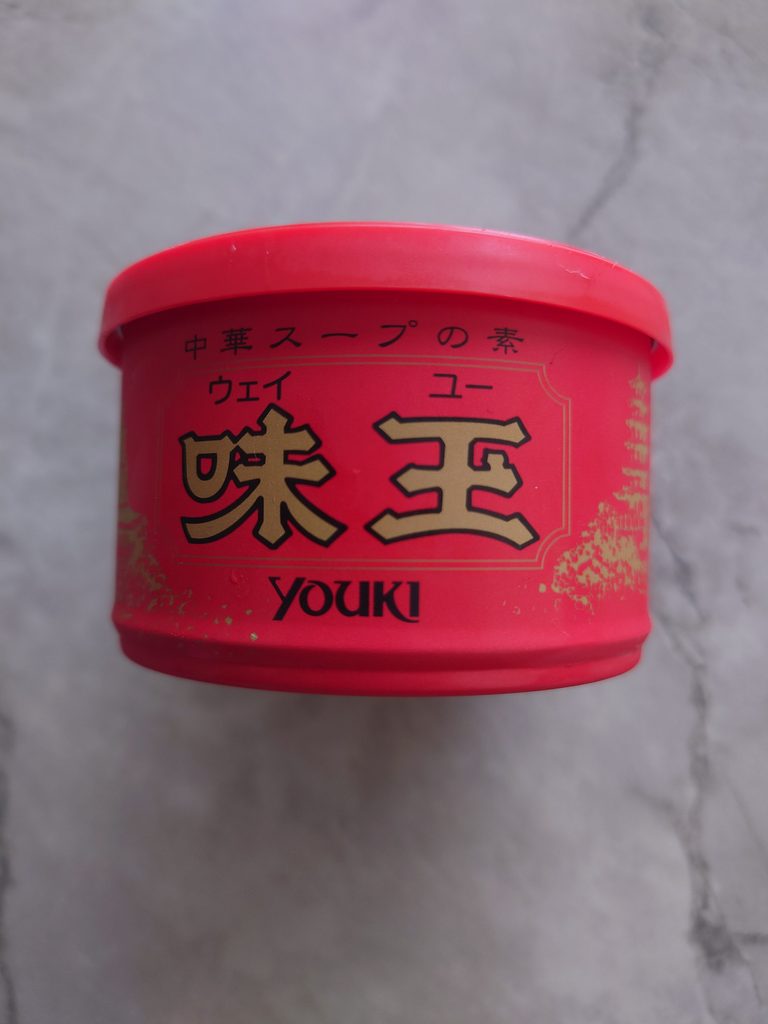
There are two similar-looking products: Weiyu (味玉) and Weipa (味覇). They’re both Chinese-style seasoning pastes, and the packaging is so alike that it’s easy to grab the wrong one. I actually bought the wrong one by mistake once.
Since we need to avoid wheat, we use Weiyu. But ingredients can change without notice, so never assume that what was safe before is still safe. Check the label every time.
Weiyu(味玉)
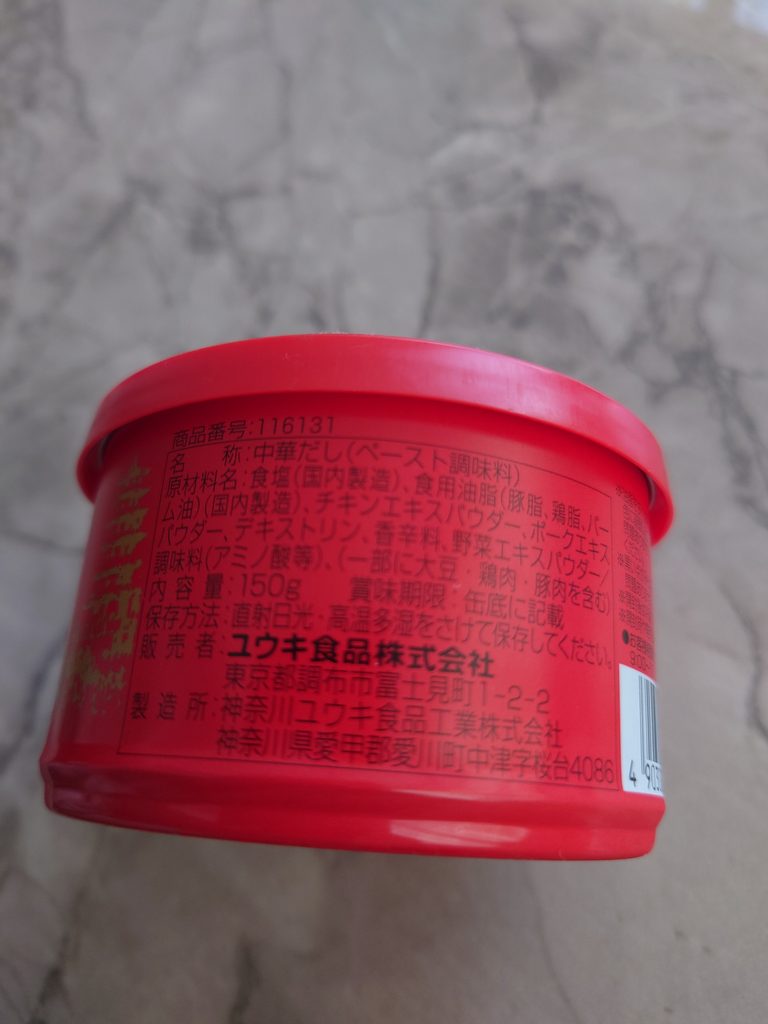
Weipa (味覇)
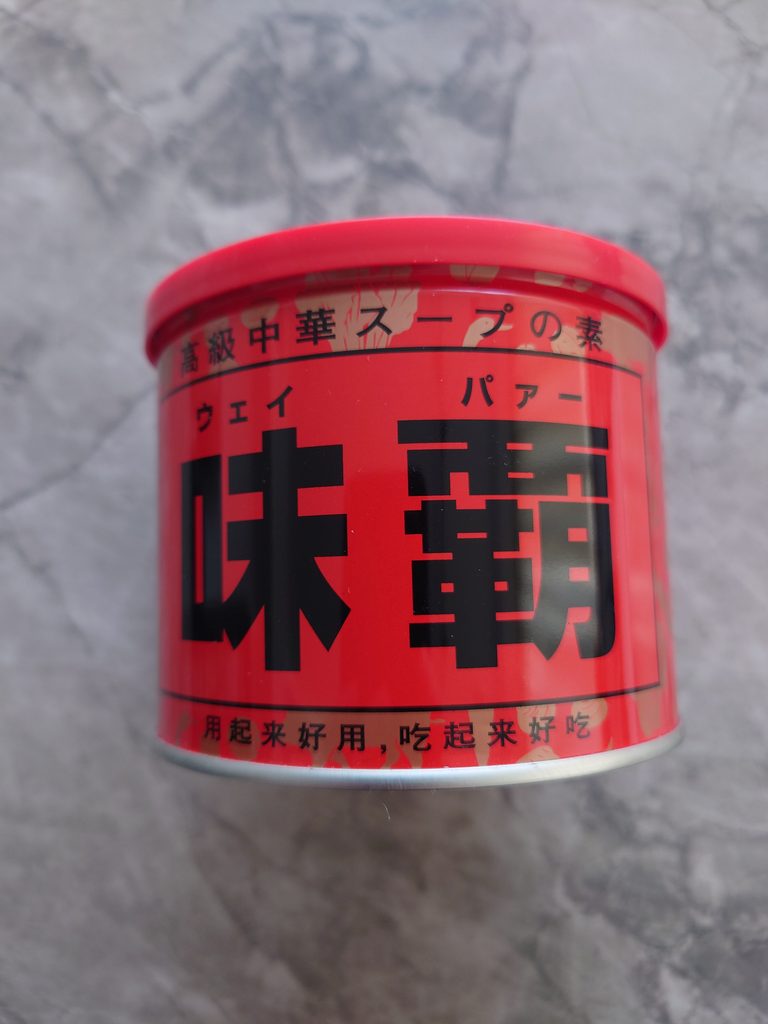
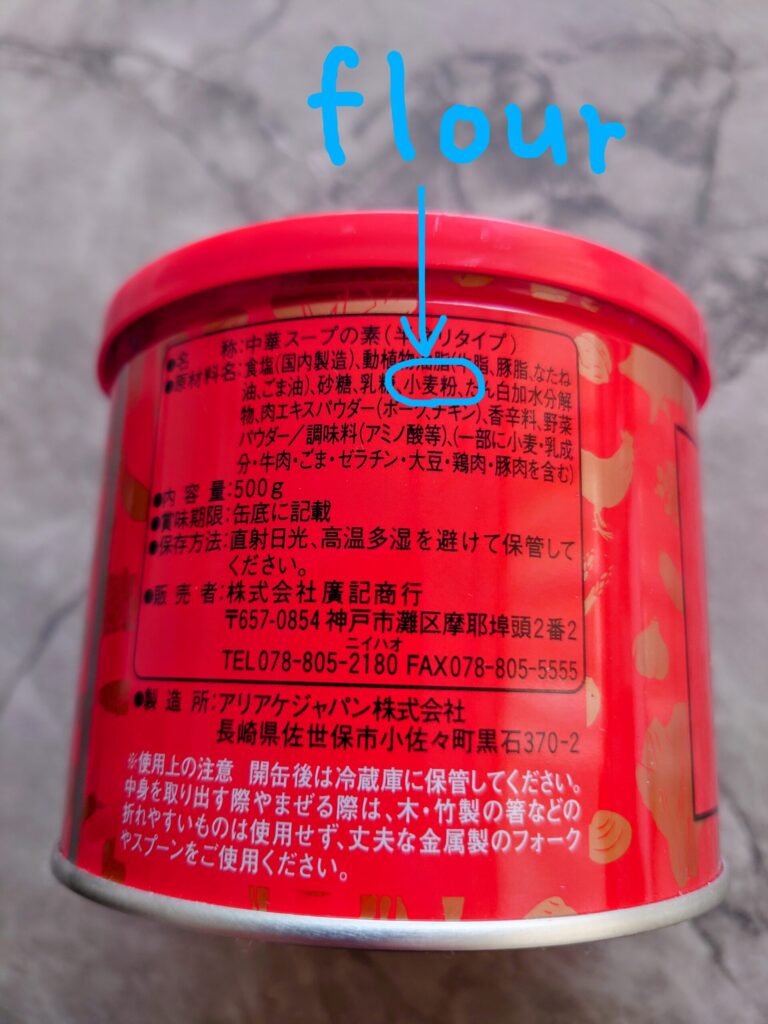
P.S. The Weipa I bought by mistake was the standard red can. I’ve never seen them in stores, but apparently there’s also a blue (seafood), gold (premium), and green (vegan) version.
And That Forgotten Lunch?
Dad took it to work.
Crisis averted.